‏إظهار الرسائل ذات التسميات OA. إظهار كافة الرسائل

21 يوليو 2016

Mapping Open Access White paper

Mapping Open Access - White paper from ACCUCOMS International

Download the latest white paper on open access publishing from ACCUCOMS International.

ACCUCOMS has been in contact with more than 50 academic publishers to understand their current and future plans for open access publishing. 


Download the white paper here: 
Find the white paper here: http://www.accucoms.com/reports/mapping-open-access/

Find the info-graphic here: http://www.accucoms.com/wp-content/uploads/2016/06/infographic-mapping-open-access.pdf

09 أبريل 2015

SAGE Selects Copyright Clearance Center to Manage Open Access

SAGE Selects Copyright Clearance Center to Manage Article Processing Charges for Its Open Access Publications

SAGE Adopts CCC's RightsLink for Open Access

SAGE Publications will use Copyright Clearance Center’s (CCC) RightsLink for Open Access platform to manage its open access (OA) publications’ article processing charges (APCs). With RightsLink for Open Access, the transactions for various OA charges are streamlined, and SAGE authors will be prompted to pay APCs from within the editorial workflow.
“SAGE made it clear that speed-to-market was a critical factor in its choice to go with CCC,” says Darren Gillgrass, CCC’s director of product management for rightsholder products and services. “As a highly configurable platform, RightsLink for Open Access was able to meet SAGE’s timeline requirement for its initial rollout while still providing a branded solution that reflects SAGE’s unique Open Access pricing and discount rules.”

For more information, read the press release.


02 أبريل 2015

National licence mooted to free up research access

Hepi paper says access could be based on having UK IP address
Unlocked padlock (illustration)
The government should consider negotiating a national licence with publishers that would give access to academic research to anyone with a UK internet connection.
That is the proposal floated in a Higher Education Policy Institute “occasional paper”, launched on 31 March, entitled “Open access: is a national licence the answer? and written by David Price, vice-provost for research at University College London, and Sarah Chaytor, head of public policy in his office.
The idea of a national licence was dismissed in a single paragraph in 2012’s landmark Finch Report into open access.
Noting that Iceland was the only country to have adopted such a scheme, it said a UK version was “unlikely to be practicable, and the costs would probably be high”. The report’s alternative recommendation for the UK to steer a course towards universal journal-provided gold open access was accepted by the government and funders.
The Hepi paper acknowledges that some progress has been made in that direction. But it says gold open access only opens access to the 6 per cent of global papers produced in the UK, while “there is no reciprocal offering from most other countries, including those who rival or exceed our own performance in research. This is having a negative impact on British competitiveness.”
The Finch Report was the inspiration for the Access to Research initiative, which makes papers hidden behind a pay wall freely accessible via terminals in UK public libraries.
But the Hepi report – launched at a conference on the research excellence framework held at the Royal Society – says potential users of research from outside the academy, such as small businesses, policymakers, doctors and teachers still “find it hard to gain access. In an age when…90 per cent of the population are online, such constraints seem out of date”.
The negotiation of a national licence with publishers, by a “government-approved body”, would greatly improve UK access to global research, “driving innovation and the knowledge economy”.
In additional to the research and funding councils, contributions to the cost could come from the knowledge transfer budget, the NHS and business.
“We would not, however, wish to pretend that a national licence offers a simple solution to reduce the public funding commitment significantly from current levels or that cost savings are the main reason to consider its introduction,” the report cautions.
They envisage the scheme running alongside the continued payment of article processing charges during the “transition towards gold open access” – although the charges could be “offset against the national licence in the way they are now beginning to be offset against subscriptions”.
The authors admit there are a number of potential obstacles, such as competition law, the difficulty of confining access to UK IP addresses and the potential refusal of some publishers to take part.
They call on the government to set up a “high-level expert working group with representatives of all the key stakeholders” to explore such issues and carry out a detailed economic impact assessment.
Professor Price, said: “There is no doubt that negotiating a national licence would involve reconciling a great many diverse interests. However, the prize at stake – bringing cutting-edge research to bear on every aspect of life in the UK – is of such significance that we must collectively pursue it.”

17 فبراير 2015

Open Access is not free

Paying the Bills 

Open access is not free. By saying that up front, I hope to confound some of the more extreme critics of the open access movement, who sometimes pretend that all OA supporters are dreamy-eyed and woolly-headed librarians who imagine that all information “wants” to be free. So I start from the premise that open access costs money, but I do immediately need to qualify that statement. By definition, open access does not charge the consumers of information any fee for access. It is free in that sense, but not in the sense that there are no costs involved in producing the works or making them freely available. 


See more at: 
http://blogs.library.duke.edu/scholcomm/2015/02/10/paying-bills/

01 يناير 2015

Partially Open Access Journal: Anabasis: studia classica et orientalia

https://lh3.googleusercontent.com/-QXWBm1PS1uw/TickrvyN54I/AAAAAAAAAQc/wiwfFHXxIGg/s1600/anabasis_1_2010_facebook_Strona_1.jpg


Partially Open Access Journal: Anabasis: studia classica et orientalia

Anabasis: studia classica et orientalia
ISSN: 2082-8993
ANABASIS. Studia Classica et Orientalia is an interdisciplinary refereed periodical devoted to the study of the Eastern Mediterranean world, Western and Central Asia in antiquity, carrying coverage of history, archaeology, numismatics, literature, and religious research. Publishing articles, notes and communications of the highest academic standard, it also features an extensive book reviews section. Particularly welcomed are essays presenting new insights, recent discoveries, and articles synthesizing the current state of research. Geographical coverage is the eastern Mediterranean basin, the Black Sea area, the Caucasus, Anatolia, Mesopotamia, Iran, Afghanistan and Central Asia. Much attention is paid to the relations between the Graeco-Roman and Oriental civilizations as well as to ancient Iranian studies.
 See the full List of Open Access Journals in Ancient Studies

25 ديسمبر 2014

UNESCO Launches Open Access Curricula

UNESCO Launches Open Access Curricula for Researchers and Librarians


The OA curricula developed by UNESCO includes a set of customized modules which can be easily be fitted with the educational needs of different OA stakeholders and can be integrated with any sensitization programmes of OA. 
The curricula for Library and Information Science Professionals entitled “Open Access for Library Schools”, consists of four course modules. An Introductory Module aims at sensitizing the library community about the history, evolution, forms and impact of OA within the domain of scholarly communication environment and covers issues related to rights management, IPR and advocacy. The remaining three modules cover subject areas of OA Infrastructure, Resource Optimization and Interoperability and Retrieval.  These sections give insights into the features, types, maintenance and standardization of OA resources, information retrieval/storage software and highlight the role of the new dimension of web-enabled resources such as e-journals, e-repositories and ICTSs.


27 نوفمبر 2014

The Gates Foundation 

pushes to make more academic research free and open to the public


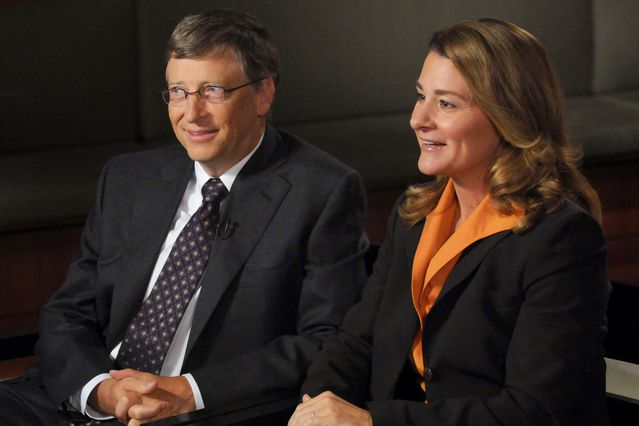
  1. Starting in January 2017, the Bill & Melinda Gates Foundation will require all of the research it funds to be published in a manner that is free for the public to read, according to a recent statement.
  2. The Gates Foundation rules are in conflict with current policies at many top journals such as Science, which generally charge for access for at least the first few months.
  3. Still, the organization has a lot of clout and may be able to push for more open access.
  4. How the Gates Foundation is pushing for open access

    The Gates Foundation spends about $900 million each year funding scientific research — which results in about 1,400 research papers on various aspects of global health.
    Under the new policy, the researchers that the organization funds will only be able to publish papers that are immediately freely accessible to the public. That means that these scientists wouldn't necessarily be able to publish in top journals like Science that charge for access to its articles — unless these journals change their policies or open up those particular papers. And, since the Gates Foundation funds so much research, there will be pressure on these journals to do so (or else they'll lose out on potentially important papers).
    More specifically, these rules will go into full effect by 2017. The articles will have to be free for anyone to use or build upon in any way, including for commercial purposes.
    This open policy is more extensive than most major biomedical funders — including the US National Institutes of Health, which only requires results to be free a year after publication.
    The Gates Foundation's policy is part of a growing movement called "open access," which promotes making research findings and data freely available to the public.

    This is part of a trend toward open access

    Researchers generally want their papers to be read by as many people as possible. But the journals that publish those papers are, in many cases, for-profit institutions — and they prefer charging for access.
    Lately, however, the Open Access movement has been fighting to make more and more research free to the public. And they're succeeding. Here's a snapshot of what was freely available to the public in 2010, sorted by discipline:
    Open Access 2010

    The big black line shows the percentage of papers in all subjects published between 1998 and 2006 that was freely available. But there's also great variation between different types of research. Topping the open list are mathematics, social sciences, and Earth sciences — each has 30 percent or more of its 2006 papers free. But compare that to clinical medicine, which is less than 5 percent.
    Some of this variation is because of different research cultures. For example, many physicists have been posting pre-publication manuscripts on a public website called arXivsince 1991, so it's not a surprise that physics (designated by blue crosses on the chart) also tends to have more of its peer-reviewed papers freely available.
    By contrast, clinical medicine and biomedical papers were some of the least likely to be freely available — at least when this chart was made. One possible reason why? Many medical institutions are willing to pay big bucks for access.
    It's worth noting that even that is changing, however. In 2008, the National Institutes of Health began requiring papers generated by the research it funded (which is taxpayer money) to be freely available to the public a year after publication or earlier. That's opened up a large chunk of biomedical research.
    The chart comes from a 2012 UNESCO report on the practice of open access, which the organization strongly encourages as a way to spread knowledge and information worldwide:
    Through Open Access, researchers and students from around the world gain increased access to knowledge, publications receive greater visibility and readership, and the potential impact of research is heightened. Increased access to, and sharing of knowledge leads to opportunities for equitable economic and social development, intercultural dialogue, and has the potential to spark innovation.

    Further reading: Hat tip to Cristobal Cobo for calling my attention to this chart. Go to his website for a discussion of various business models that could keep open publishing sustainable.
    Update: This story was updated to provide more clarity about the specific requirements of the Gates Foundation's new policy.

15 نوفمبر 2014

Open Access to Research Data as a Driver for Open Science | RECODE Final Conference


The conference  aims to contribute to the ongoing dialogue on open science and open access to research data in particular by providing a forum for discussion that brings together an excellent line-up of international experts and key stakeholders. The Conference is designed around the following key themes:
  • Policies for open access to research data
  • Good practices in enabling re-use of research data
  • Open research data and research cultures
  • PSI as research data and vice versa
  • Grand challenges in opening access to research data
The conference will showcase the results from RECODE and officially launch the RECODE Policy Recommendations. The key impact of RECODE will be to reduce fragmentation in the open access ecosystem by providing practical and evidence based advice to the organisations involved in facilitating open access to research data. This will be achieved through the production of overarching recommendations as well as specifically targeted at the following stakeholder groups:
  • Data managers
  • Funders
  • Publishers
  • Research institutions
The RECODE final conference provides an opportunity for learning as well as taking part in a rich dialogue regarding open access to research data within the current European research landscape. The Agenda and location information can be found on the RECODE website.
The conference is organized by the National Documentation Centre and will take place at the National Hellenic Research Foundation in the heart of Athens.  Attendance is free but registration is required. The conference will be broadcast through live streaming.

10 نوفمبر 2014

Replication, data access, and transparency in social science

·         bY R. MICHAEL ALVAREZ

Improving the transparency of the research published in Political Analysis has been an important priority for Jonathan Katz and I as co-editors of the journal. We spent a great deal of time over the past two years developing and implementing policies and procedures to insure that all studies published in Political Analysis have replication data available through thejournal’s Dataverse. At this point in time, we have over 220 studies available in the journal’s Dataverse archive, and those studies have had more than 14,400 downloads. We see this as a major accomplishment for Political Analysis.
We are also optimistic that soon many political science journals will join us in implementing similar replication standards. An increasing number of journals developing and implementing replication standards will improve the quality of research in political science, aid in the distribution of materials that can be used in our classrooms, and make the publication process more straightforward for authors.
In late September, Jonathan and I had the opportunity to participate in a two-day “Workshop on Data Access and Research Transparency” at the University of Michigan. The workshop is part of an initiative sponsored by the American Political Science Association (APSA) to develop a discipline-wide discussion of how to improve research transparency in political science. The primary goal was to bring the editors of the primary journals in political science into this conversation. While there is no doubt that there was widespread agreement among the journal editors present that making research more transparent and making data more accessible are important goals, there are still open questions about how such goals can be implemented.
One of the major products of this workshop was a statement of principles for political science journals. While the statement has not yet been released, it contains a short set of principles, the most important of which are that the signing journals will require authors to make replication materials accessible, and that the signing journals will take steps to make the research published in their journal more transparent. Political Analysis is one of the signatories of this statement: we will continue to work to improve the accessibility of data and other research materials for the papers we publish in Political Analysis, as well as assist other journals as they work to develop their own replication and research transparency standards.
As part of this initiative, we have revised our author and reviewer instructions. Our new instructions include:
1.    Updated and clarified standards for how authors should present empirical results in their submissions, in particular tables and figures.
2.    More detailed instructions on our replication requirement.
3.    Encouragement and guidance for authors who wish to pre-register their research studies.
We hope that other journals will follow our lead, and that they will quickly develop strong standards for replication and research transparency. The APSA initiative is laudable, and it is helping to position political science as a leader in these areas, certainly in the social sciences but also throughout the sciences and humanities. We welcome the APSA DART initiative, and will continue to work to position Political Analysis as a leader in developing and implementing data access and research transparency standards.
Headline image credit: Circuit board. CC0 via Pixabay.


16 أكتوبر 2014

October 17th: Symposium "Rushing to Revolution? Open Access Models for Humanities Journals".

October 17th: Symposium 'Rushing to Revolution? Open Access Models for Humanities Journals'. Venue: Utrecht (The Netherlands). Registration with tijdschriftstudies@let.ru.nl

There is a Symposium on  Open Access Models for Humanities Journals on 17th October 2014 at Utrecht, The Netherlands. 


This symposium, organised by TS·> Tijdschrift voor tijdschrift­studies and Utrecht University Library, will explore possible solutions for scholarly journals that are contemplating or planning a transition to Open Access, and for journals that are currently trying to survive in Open Access. Experts from the international field of Open Access publishing for Humanities will share their views and experiences.
Furthermore, several journal editors who made the transition to OA will talk about their new business models and the challenges they are facing


22 سبتمبر 2014

Another OA Publisher Launches with 96 New Journals

Academia Research launched recently with 96 brand new scholarly journals, most of them broadly focused. This publisher uses the gold open-access model and bills authors upon acceptance of a manuscript. It says,

Fees and Charges: A handling fee of $550 will be billed to the authors for each manuscript published.

Other than this, there’s not much to say about this publisher. It has a minimalist website that provides little of the information that scholarly publishers conventionally provide.
Some of its journals have only a couple editorial board members, yet they are accepting manuscript submissions, which is done through email.


Appendix: Academia Research journals as of 2014-09-01:
  1. Advances in Accounting and Taxation
  2. Advances in African Studies and Development
  3. Advances in Agricultural Economics and Extension
  4. Advances in AIDS and HIV Research
  5. Advances in Bacteriology Research and Review
  6. Advances in Biodiversity and Conservation Research
  7. Advances in Bioinformatics and Sequence Analysis
  8. Advances in Biophysics and Structural Biology
  9. Advances in Biotechnology Research
  10. Advances in Brewing and Distilling
  11. Advances in Cancer and Experimental Oncology Research
  12. Advances in Cell and Animal Biology Research
  13. Advances in Cell Biology and Genetics Research
  14. Advances in Cereals and Oilseeds
  15. Advances in Chemical Engineering and Materials Science
  16. Advances in Civil Engineering and Construction Technology
  17. Advances in Clinical Immunology and Immunopathology Research
  18. Advances in Clinical Medicine
  19. Advances in Clinical Pathology and Forensic Medicine
  20. Advances in Dentistry and Oral Hygiene Research
  21. Advances in Developmental Biology and Tissue Engineering
  22. Advances in Diabetes and Endocrinology Research
  23. Advances in Economics and International Finance
  24. Advances in Electrical and Electronics Engineering Research
  25. Advances in Engineering and Computer Innovations
  26. Advances in Engineering and Technology Research
  27. Advances in Entomology and Nematology
  28. Advances in Environmental Chemistry and Ecotoxicology
  29. Advances in Epidemiology Research
  30. Advances in Evolutionary Biology Research
  31. Advances in Fine and Studio Art
  32. Advances in Fisheries and Aquaculture
  33. Advances in General and Molecular Virology
  34. Advances in Genetics and Molecular Biology Research
  35. Advances in Geography and Regional Planning
  36. Advances in Geology and Mining Research
  37. Advances in Horticulture and Forestry
  38. Advances in Hospitality Management and Tourism
  39. Advances in Infectious Diseases and Immunity Research
  40. Advances in Internet and Information Systems
  41. Advances in Languages and Culture
  42. Advances in Livestock Production
  43. Advances in Material Science and Engineering
  44. Advances in Mechanical Engineering Research
  45. Advances in Media and Communication Studies
  46. Advances in Medical Genetics and Genomics Research
  47. Advances in Medical Laboratory and Diagnosis Research
  48. Advances in Medicinal Plants Research
  49. Advances in Metabolomics and Systems Biology Research
  50. Advances in Microbiology and Antimicrobials
  51. Advances in Music and Dance
  52. Advances in Neuroscience and Behavioral Health Research
  53. Advances in Nursing and Midwifery Research
  54. Advances in Oceanography and Marine Science
  55. Advances in Parasitology and Vector Biology Research
  56. Advances in Petroleum and Gas Engineering
  57. Advances in Pharmacognosy and Phytotherapy Research
  58. Advances in Philosophical Research and Reviews
  59. Advances in Physical Education and Sport Management
  60. Advances in Physiology and Pathophysiology
  61. Advances in Plant Breeding and Crop Science
  62. Advances in Plant Physiology and Science
  63. Advances in Political Science and International Relations
  64. Advances in Public Administration and Policy Research
  65. Advances in Soil Science and Environmental Management
  66. Advances in Stored Products and Postharvest Research
  67. Advances in Toxicology and Environmental Health Sciences
  68. Advances in Veterinary Medicine and Animal Health Research
  69. Advances in Yeast and Fungal Research
  70. African Advances in Agricultural Research
  71. African Advances in Biochemistry Research
  72. African Advances in Business Management
  73. African Advances in Ecology
  74. African Advances in Food Science
  75. African Advances in History and Culture
  76. African Advances in Marketing Management
  77. African Advances in Mathematics and Computer Science
  78. African Advances in Microbiology Research
  79. African Advances in Nutrition and Metabolism Research
  80. African Advances in Pharmaceutical Biotechnology
  81. African Advances in Pharmacy and Pharmacology Research
  82. African Advances in Physical Sciences
  83. African Advances in Pure and Applied Chemistry
  84. African Advances in Sociology and Anthropology
  85. Educational Research and Reports
  86. Environmental Sciences and Essays
  87. International Advances in Computer Engineering Research
  88. International Advances in Educational Administration and Policy Studies
  89. International Advances in English and Literature
  90. International Advances in Library and Information Science
  91. International Advances in Psychology and Counselling
  92. International Advances in Science and Technology Education Research
  93. International Advances in Vocational and Technical Education
  94. International Advances in Water Resources and Environmental Engineering
  95. Public Health Research and Essays
  96. Scientific Research and Review